Playgroup
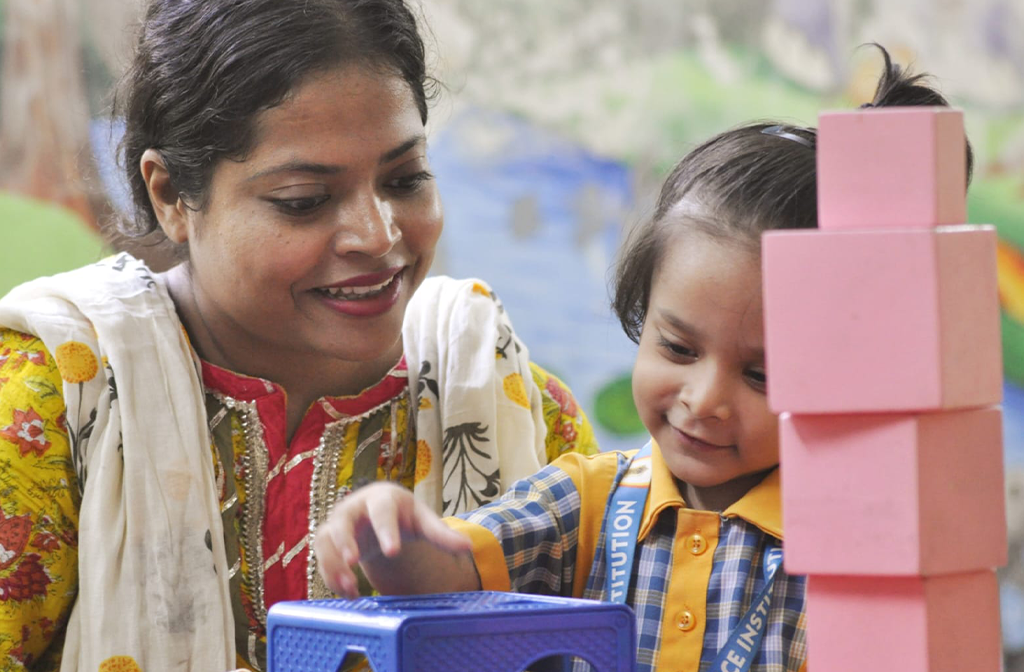
The curriculum focuses on foundational skills through play-based approach covering language, communication skill, pre-maths concepts, fine and gross motor skills, and socio-emotional growth through story -telling, rhymes, games, colouring, action songs, clay moulding, bead counting. The curriculum aims to build confidence and a love for learning.
Nursery
Children are introduced to foundational concepts like letters, numbers, colours, and shapes in a nurturing environment that supports cognitive, social, and motor development. Through hands-on activities such as storytelling, action songs, play-way methods, and audio-visual aids, we foster creativity, communication, and a love for learning. Activities like drawing and block play enhance hand-eye coordination, while music, dance, and physical play promote fitness and coordination. A variety of age-appropriate experiences encourage discovery, engagement, and holistic growth.
Lower Kindergarten
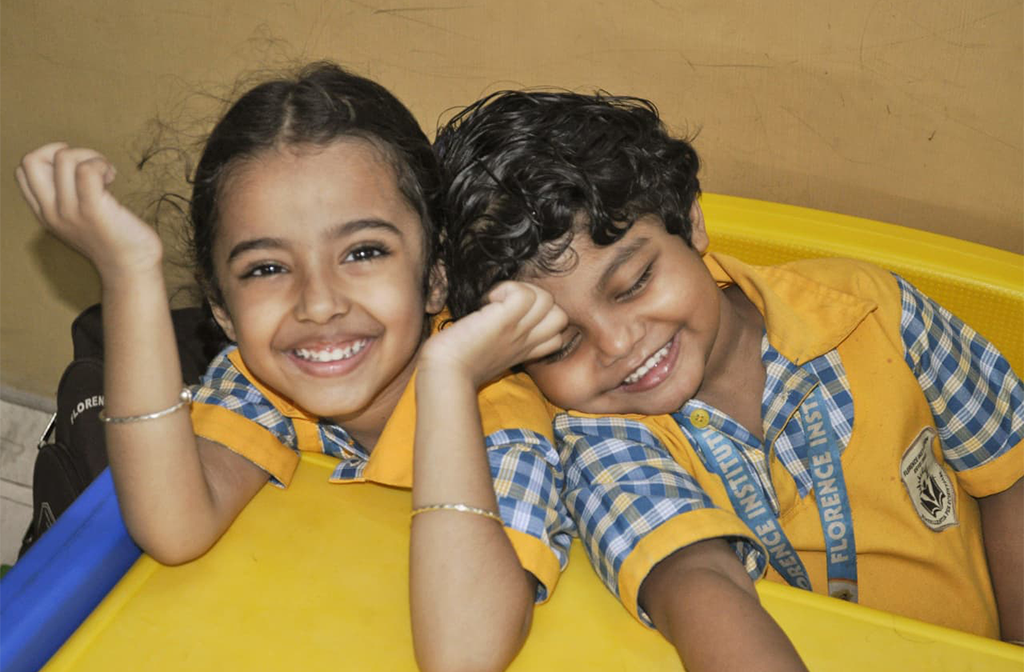
The LKG curriculum at Florence Institution builds a strong foundation in social and emotional, cognitive and language skills. Through rhymes, stories, conversations and pre-writing, children learn literacy and numeracy. Activities like colouring, block play, music, dance and role-play foster creativity, motor skills, healthy habits and confidence for holistic development.
Upper Kindergarten
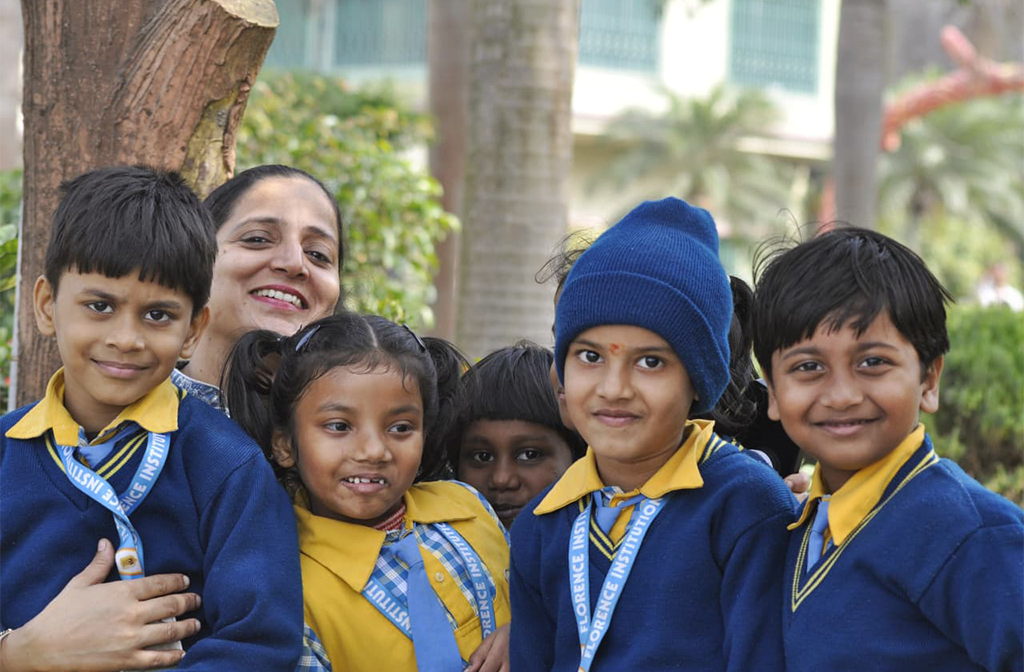
The UKG curriculum at Florence Institution develops strong foundations in English, Mathematics and General Awareness. Children practices reading, writing, counting, shapes and simple arithmetic while learning about animals, transport and the environment. Activity-based methods like rhymes, storytelling, art and craft, music, dance and play build creativity, motor skills, discipline and confidence, fostering curiosity and holistic development.
Class I
Class I introduces to basic subjects like Vernacular, English, Mathematics, EVS and Social Studies. Focus is mainly given on building reading, writing and speaking skills. They also have Computer, Life Skill and G.K. as their Co-curricular subjects. Apart from academics they gain environmental awareness and promote a healthy active life style.
Class II
Children are introduced to core subjects like English, Vernacular, Mathematics and EVS. They also have Computer, Life Skills and G.K. Students develop basic reading, writing and arithmetic abilities, fostering critical thinking and building languages and vocabulary skills. Activities like drawing enhance hand-eye coordination, while music, dance and physical play promote fitness and coordination. A variety of age-appropriate experiences encourage discovery, engagement and holistic growth.
Class III
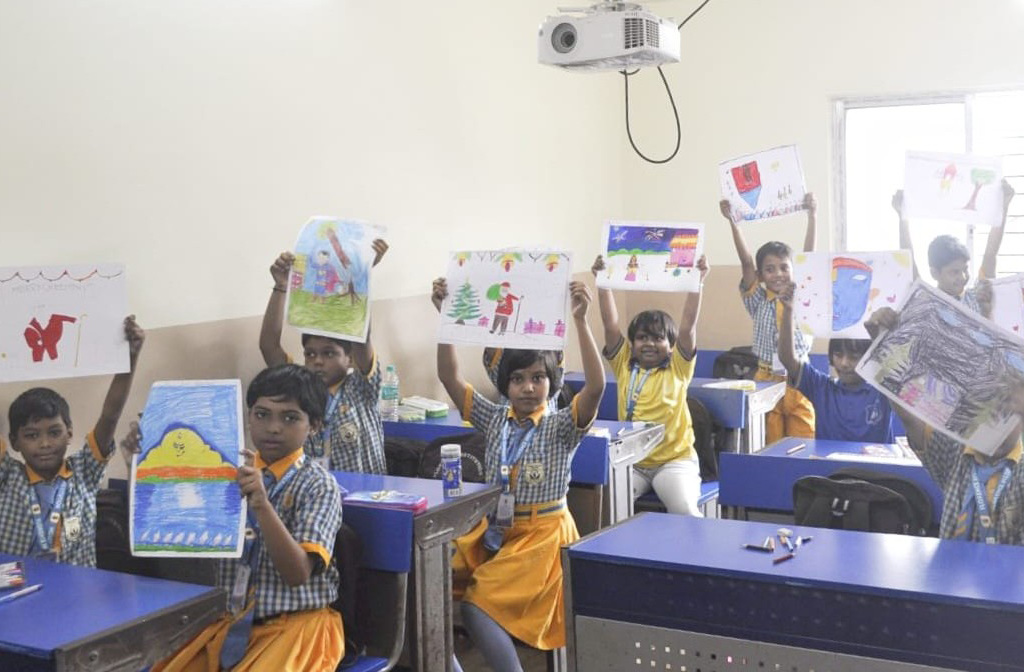
Class III includes English, Vernacular, Mathematics, Science and Social Studies as their main subjects. In English and Vernacular, students learn grammar, comprehension, proses and poems. Science and Social Studies cover topics like plants, festivals, transport, community helpers and environment. Extra-curricular activities like music, craft, sports and drawing make learning more fascinating. They learn moral values and discipline from Life Skill.
Class IV
Students of Class Ⅳ study English, Vernacular, Social Studies, Mathematics and Science as their main subjects. These are supplemented with subject such as art and craft, music and physical education are also part of their academies. In this stage they focus on reading, writing, grammar and vocabulary through stories and poems. Social Studies and Science integrate topics about plants, animal, human body hygiene and social interaction. They also have Computer and Life Skill as their co-curricular subjects. The curriculum is designed to build a solid foundation in core skills through interactive and engaging learning experiences.
Class V
Apart from main subjects like English, Vernacular, Mathematics, Science and Social Studies, Class V students learn art, craft, music and physical education for their holistic development. They build strong reading and writing skills, comprehension, grammar, vocabulary and creative writing. S. St. teaches them about the people, religion and environment of India. The curriculum focuses on building a strong academic foundation in core subjects through an interactive activity based learning approach.
Class VI
Class VI includes subjects like English, Vernacular, Mathematics, Social Studies and Science as their main subjects. Besides, they also have Computer, Life Skill and 3rd Language as their co-curricular subjects. Mathematics includes algebra, fractions, ratio and mensuration whereas Science is divided into Physics, Chemistry and Biology basics. Extra subjects like Music, Art & Craft and Physical Education adds to their overall development. The curriculum aims to develop a strong foundation in core subjects with learning outcomes focused on conceptual clarity, analytical skills and practical application.
Class VII
Class VII covers subjects like English, Vernacular, Mathematics, Science, Social Studies, Computer and Life Skill. They learn to be more creative by writing stories, diaries, letters and also comprehending the questions from the given passage. Maths includes algebra, fractions, decimal, mensuration and geometry. Science includes Physics, Chemistry and Biology. To grow holistically they are provided with extra-curricular subjects like music, art & craft and physical education. Through their curriculum they develop cognitive, affective and psychomotor skills through competency-based learning.
Class VIII
Students develop problem-solving skills in Maths, understanding scientific principles in Science, analysing historical and social events in Social Studies and improving communication in English and Vernacular. Extra subjects like music, art & craft and physical education make them more creative.